Charlize Theron: South African Actress

As Queen Ravenna in Snow White and the Huntsman

The Charlize Theron Africa Outreach Project (CTAOP) was created in 2007 in an effort to keep African youth safe from HIV/AIDS.
Charlize Theron is involved in Woman´s Rights Organizations and Pro-Choice Movements.

She supports animal rights and appears in anti-fur campaigns like the above.

"The Hottentot Venus": S. African Native
Saartjie Baartman was a Khoisan slave who at the age of 20 was taken from Cape Town to London and Paris, to be displayed naked in streets and at circuses!

George Cuvier, a distinguished Social Anthropologists, believed she was the missing link!
Sara Baartman died in Paris in 1816. Cuvier made a plaster cast of her body, dissected it and conserved the skeleton and organs in bottles of formaldehyde at the Musée de l’Homme in Paris.

Her remains were displayed there until 1976!
In 1994, President Nelson Mandela formally requested that France return the remains; they were repatriated in 2002 and buried at her birthplace in the Gamtoos Valley (Eastern Cape, S. Africa).


Dr. MuLaLo DoYoYo: South African Inventor
He is the inventor of CENOCELL, a structural material made of the ash leftovers from coal burning.
Potential uses for the material are:
Building and Construction Industry
Transportation industry
Aerospace industry

The Marble Berry
This perennial herb is the world´s shiniest and most colorful organism on Earth and its color doesn´t fade! Researchers found samples in Herbariums which were collected in the XIX century, and they look just as bright as nowadays´ berries!

Unlike in most fruits in Pollia condensata the cellulose is layered and it reflecting more light (mainly blue) than any other living organism...Notably also, each individual cell generates color independently producing a pointillist effect!

It inhabits densely forested areas of Africa


GrEEn BoTTLe FLy: South Africa
Their larvae or maggots grow to full size in 2-10 days, then drop into the soil before pupating into adult flies.

L. sericata larvae are used as a Biosurgery Agent (MDT: Maggot Debridement Therapy) in cases when antibiotics and surgery aren´t possible.
Maggots can eat dead or necrotic tissue without harming the surrounding living tissue and its secretions aid tissue regeneration.

Finally, because L. sericata is one of the first insects to colonize a corpse, it´s favored over other species in determining an approximate time of death by forensic entomologists.
Cabbage Tree Emperor Caterpillar: South African

This incredible insect is 70 mm long and 15 mm in diameter

And this is the moth

Pupae are subterranean and emerge from the cocoon in the spring/summer
South African Vegetable Ivory or Real Fan: An African Palm
In Africa, Hyphaene ventricosa is known as the vegetable ivory, a product made from its incredibly hard seed´s endosperm or inner tissue.
 The nuts of this palms have a sweet and juicy outer pulp which reminds of gingerbread, leading to the name of "Gingerbread palm".


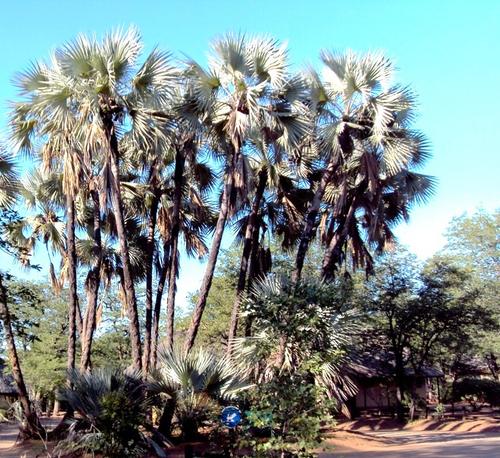
H. natalensis, the Lala or Llala palm from Tongaland in KwaZulu-Natal´s fermented sap is a source of wine (kallu) but this process eventually kills the plant...
Ilala nuts are a delicacy for elephants who swallow them whole, digest the flesh and excrete the seeds.
This process cracks the hard outer shell and leaves the seed ready to germinate or carve.

Finally with the palm leaves locals weave beautiful baskets...
South African Wild Cucumber
The 10 mm long fruit of this perennial herb, contains calcium, vitamin C, nicotinic acid and iron.


The fruit has been pickled since the 17th century and taken to the West Indies by the
Amadumbe: South African Indigenous Crop
Colocasia esculenta is a tuber under many common names, such as Amadumbe (South
Africa), Taro (Pacific islands) or Cocoyam (West Africa).
It is a traditional food crop grown in the KwaZulu-Natal
(KZN) province of South Africa.

This “potato of the tropics” is cooked much like a yam. It is believed that amadumbe has been cultivated for over 6 000 years and originated in Oceania and South East Asia.
 Nutritional evaluation showed anti-nutritional properties that reduce the availability of nutrients to animals and humans.
 Amylase, present in Amadumbe prevents starches from being digested and absorbed by the body and this could be useful for treating obesity and diabetes mellitus.
Subscribe to:
Posts (Atom)