
The Marble Berry
This perennial herb is the world´s shiniest and most colorful organism on Earth and its color doesn´t fade! Researchers found samples in Herbariums which were collected in the XIX century, and they look just as bright as nowadays´ berries!

Unlike in most fruits in Pollia condensata the cellulose is layered and it reflecting more light (mainly blue) than any other living organism...Notably also, each individual cell generates color independently producing a pointillist effect!

It inhabits densely forested areas of Africa


GrEEn BoTTLe FLy: South Africa
Their larvae or maggots grow to full size in 2-10 days, then drop into the soil before pupating into adult flies.

L. sericata larvae are used as a Biosurgery Agent (MDT: Maggot Debridement Therapy) in cases when antibiotics and surgery aren´t possible.
Maggots can eat dead or necrotic tissue without harming the surrounding living tissue and its secretions aid tissue regeneration.

Finally, because L. sericata is one of the first insects to colonize a corpse, it´s favored over other species in determining an approximate time of death by forensic entomologists.
Cabbage Tree Emperor Caterpillar: South African

This incredible insect is 70 mm long and 15 mm in diameter

And this is the moth

Pupae are subterranean and emerge from the cocoon in the spring/summer
South African Vegetable Ivory or Real Fan: An African Palm
In Africa, Hyphaene ventricosa is known as the vegetable ivory, a product made from its incredibly hard seed´s endosperm or inner tissue.
 The nuts of this palms have a sweet and juicy outer pulp which reminds of gingerbread, leading to the name of "Gingerbread palm".


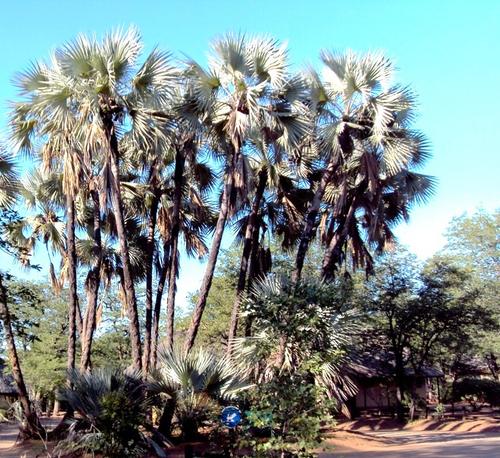
H. natalensis, the Lala or Llala palm from Tongaland in KwaZulu-Natal´s fermented sap is a source of wine (kallu) but this process eventually kills the plant...
Ilala nuts are a delicacy for elephants who swallow them whole, digest the flesh and excrete the seeds.
This process cracks the hard outer shell and leaves the seed ready to germinate or carve.

Finally with the palm leaves locals weave beautiful baskets...
South African Wild Cucumber
The 10 mm long fruit of this perennial herb, contains calcium, vitamin C, nicotinic acid and iron.


The fruit has been pickled since the 17th century and taken to the West Indies by the
Amadumbe: South African Indigenous Crop
Colocasia esculenta is a tuber under many common names, such as Amadumbe (South
Africa), Taro (Pacific islands) or Cocoyam (West Africa).
It is a traditional food crop grown in the KwaZulu-Natal
(KZN) province of South Africa.

This “potato of the tropics” is cooked much like a yam. It is believed that amadumbe has been cultivated for over 6 000 years and originated in Oceania and South East Asia.
 Nutritional evaluation showed anti-nutritional properties that reduce the availability of nutrients to animals and humans.
 Amylase, present in Amadumbe prevents starches from being digested and absorbed by the body and this could be useful for treating obesity and diabetes mellitus.
WaterMelon: S. African Original
It is believed that watermelon originated in Southern Africa where it can be found growing wild.

Winslow Homer "Watermelon Boys", 1876.
Evidence of its cultivation in the Nile Valley was found from 2.000 BC and seeds were found at XII Dynasty sites and in the tomb of Pharaoh Tutankhamun.

Grace Carpenter Hudson "The Watermelon", 1920
Watermelon is also mentioned in the Bible as a food eaten by the Israelites under slavery in Egypt.
By the 10th century, they were being cultivated in China.

Moorish invaders had introduced it to Europe in the XIII century and it was grown by Native Americans in the 16th century.
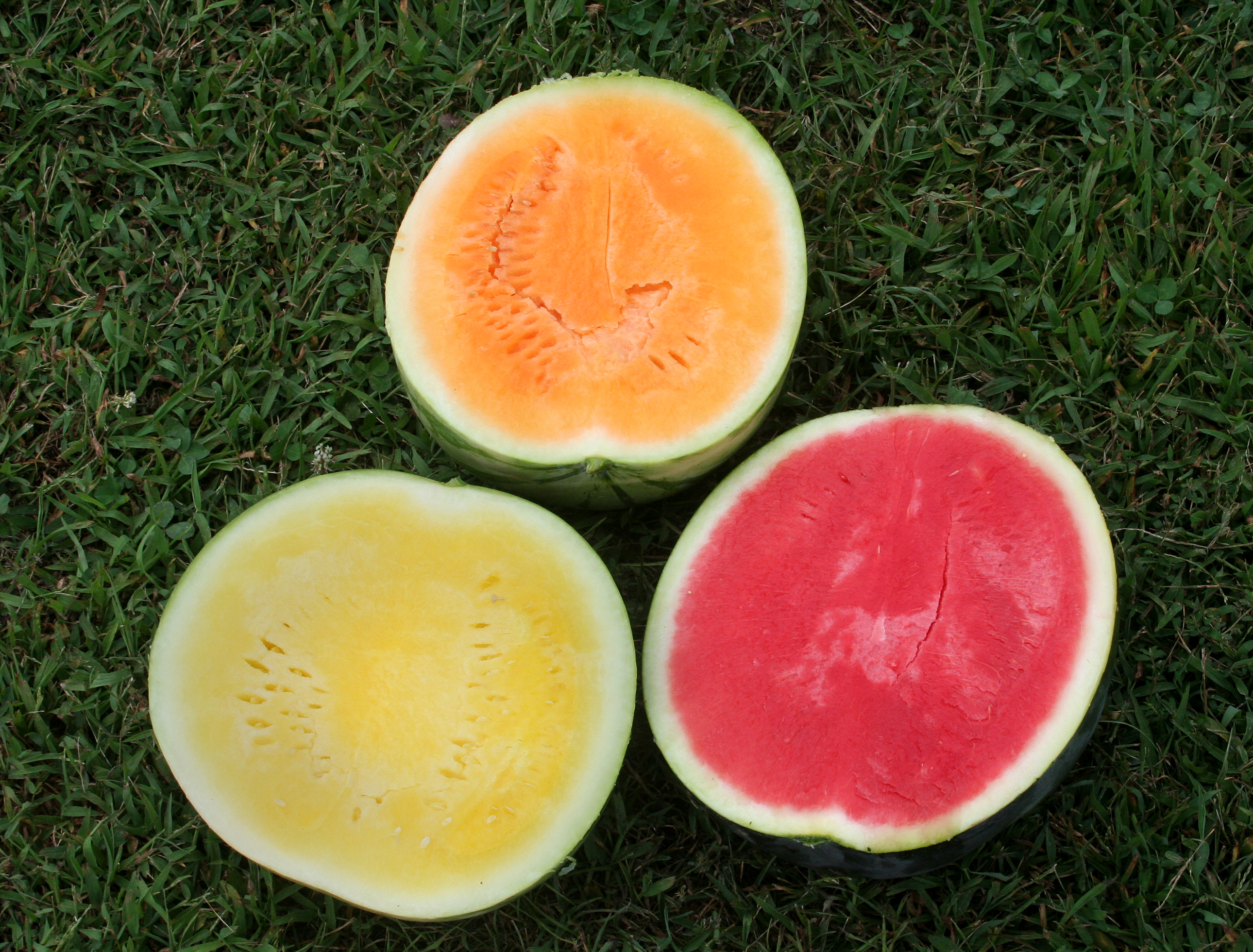

Watermelon rinds, usually green or white, can be eaten and contain many nutrients and can be use as a vegetable: stir-fried, stewed or pickled!
Watermelon juice can be made into wine...and ART!
South African Foods: ENSETE
Known as "False Banana" or Abyssinian or Ethiopian Banana is a 6-12 m plant which flowers and carries fruits only once before it dies after 1-2 years (as a perennial plant)...
It isn´t a tree but a giant herb!
It isn´t a tree but a giant herb!

Ensete ventricosum, by Walter Hood Fitch, 1861.
The part of the plant that looks like a trunk is really a false stem called pseudostem, formed by the tight overlapping of leaves forming a casing or sheat; the pulp in the pseudostems and rootstock are eaten...

The pseudostem continues to raise as the leaves emerge one after the other until it reaches its maximum height and then the inflorescens emerge at the top of the plant which are tasty and are eaten cooked.

The plant is of the same family as the banana, but the fruits are only consumed in times of necessity.

The pea size seeds are used as beads, to make rosaries or rattles and can be eaten in times of starvation,

Finally the leaves can be used for thatching houses and the stalk to make fibres for ropes, sacks and baskets.
For fantastic photos and more info check:

Southern Giant Octopus
Reaching dimensions of up to 1.8 m and a weight of 11.4 kg the Enteroctopus magnificus lives from Namibia to Port Elizabeth in South Africa, from shallow muddy and sandy areas to about 1000 m depths.

They have distinct wrinkles or folds running lenghtwise on its body and a narrower head than the mantle. Watch its Pacific relative in this video...

Drawing by malacologist Pierre Dénys de Montfort, 1801 from the descriptions of French sailors reportedly attacked, off the coast of Angola
Enteroctopus known also as the giant octopuses, is a genus confined to the tepid areas of the Northern and Southern hemispheres characterized by their large size.
They have distinct wrinkles or folds running lenghtwise on its body and a narrower head than the mantle. Watch its Pacific relative in this video...
LeatherBack Sea Turtle or Lute Turtle
These critically endangered sea turtles, the largest of the species can weight up to a 900 kg (2000 pounds), measure nearly 2 m.

They are also the fastest reptile being able to swim at speeds of 35.28 kilometres per hour (21.92 mph).
They are also the most migrant of the turtles, crossing both the Pacific and the Atlantic ocean.
Watch the National Geographic video and read at:
http://animals.nationalgeographic.com/animals/reptiles/leatherback-sea-turtle/
They are also the fastest reptile being able to swim at speeds of 35.28 kilometres per hour (21.92 mph).
They are also the most migrant of the turtles, crossing both the Pacific and the Atlantic ocean.
http://animals.nationalgeographic.com/animals/reptiles/leatherback-sea-turtle/
Nyala or Inyala: South African Antelope

The female...Gestation lasts seven months. A single calf is born, weighing 5 kg (11 lb)
And the male which are threatened due to the high demand as hunting game...
Knysna Turaco or Knysna Lourie: South African Indigenous
These are the only birds that are truly red and green, unlike most birds in which the color observed is a reflection produced by the feather structure.
They maintain their colors throughout the year.

The red pigment (turacin) and green pigment (turacoverdin) both contain copper; these pigments disolve in water turning it pink if feathers are stirred in it.
The pigments colors deepen with age due to the copper oxidizing.
Most of its population inhabits coastal Eastern Cape and KwaZulu-Natal
Plum-Coloured or Amethyst Starling
They live in savannah woodlands and riverine forests in sexually segregated flocks, which follow the the trees fruit cycles. They weight around 45 gr.

Females which don´t have the males iridescent plumage, incubate for 12-14 days 2-4 eggs.

These birds are monogamous and build together the nest in tree holes and hollow fence posts with green leaves and other materials.


Subscribe to:
Posts (Atom)