The "Carrion" flower
"Carrion" means dead or rotting flesh!
Orbea variegata

It originally comes from the winter rainfall area of the Western Cape mainly along the coastal belt. It grows actively during Winter and Spring.

Orbea ubomboensis

Orbea melanantha

Orbea elegans Plowes is the most recently described species and it´s listed as Critically Endangered.

Orbea namaquensis. It´s restricted to Namaqualand in the northwestern corner of South Africa.
Orbea variegata
It originally comes from the winter rainfall area of the Western Cape mainly along the coastal belt. It grows actively during Winter and Spring.
Orbea ubomboensis
Orbea melanantha
Orbea elegans Plowes is the most recently described species and it´s listed as Critically Endangered.
Orbea namaquensis. It´s restricted to Namaqualand in the northwestern corner of South Africa.


South African EnDangered: GiAnT Golden MOLe
It is a subterranean, hibernating, nocturnal animal which has got
Body length: 20.8 - 23.5 cm
Weight: 410-500 g
It has got robust claws in the front legs and 5 webbed digits for shovelling soil backwards while digging well connected burrows among the tree roots, up to 13 m long!

kNocK, kNocK joking
Knock! Knock!
Who´s there?
Watson.
Watson who?
Watson TV tonight?
Knock! Knock!
Who´s there?
Justin.
Justin who?
Justin time for dinner!
Oscar Pistorius: S. African Sprint RuNNer
Known as Blade Runner, "The Fastest Man on No Legs" or "Oz" Pistorius celebrated his twenty-sixth birthday today December 20th. HAPPY BIRTHDAY!

He is the first double amputee to run at the Olympics 2012 with his "Flex-Foot Cheetah Carbon Fibre Trastibial Prostheses".
He is the first double amputee to run at the Olympics 2012 with his
Kew Gardens (London): Marianne North Gallery

Bird of Paradise (flowers), Strelitzia reginae + SugarBirds (Promerops cafer)
Marianne North in Natal, S. Africa

Hibernation
How does it work? CLicK to find Out

The Cape sand frog (Tomopterna delalandii) uses its back legs to burrow into the sand, where it hibernates through the South African Winter.
What is GroundHog Day?
On February second 1887 Groundhog Day was celebrated at Gobbler's Knob in Punxsutawney, Pennsylvania (USA), starring for the first time a rodent meteorologist.

According to tradition, if Phil, Bill or Chuck the groundhog comes out of its hole on this day and sees its shadow, there will besix more weeks of Winter weather; no shadow means an early Spring.
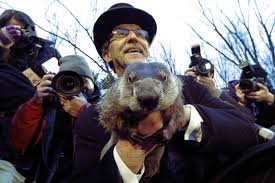
Here´s a tongue twister inspired by its Algonquian name (a Native American language) wuchak.
According to tradition, if Phil, Bill or Chuck the groundhog comes out of its hole on this day and sees its shadow, there will be
Here´s a tongue twister inspired by its Algonquian name (a Native American language) wuchak.
- How much wood would a woodchuck chuck
if a woodchuck could chuck wood? - A woodchuck would chuck all the wood he couldif a woodchuck could chuck wood
Santa Claus´ Companions
In Austria, Eslovenia and Croatia, when a child gets a present from St. Nicolas he receives a golden branch that represents his good acts during the year.

But, if the child has misbehaved, Krampus will take the presents for himself and leave only a silver branch to represent the child's bad acts. He carries chains to scare children and has got a hoof and a foot!
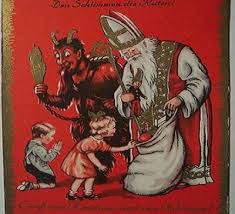
Children are scared into sleeping during the time St. Nicolas brings presents by being told that if they´re awake, Krampus will think they´ve been bad and will take them away in his sack!
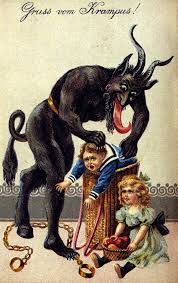
Belsnickel is part of the folklore of Newfoundland, some parts of Canada, USA (Pennsylvania´s Dutch communities) and in Germany.
The Belsnickel shows up at houses 1 to 2 weeks before Christmas and he carries a switch in his hand with which to beat bad children.
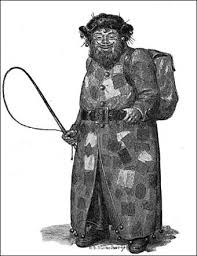
The children escape unharmed, but they´re scared into being good so that Santa will bring them presents on Christmas.
But, if the child has misbehaved, Krampus will take the presents for himself and leave only a
Children are scared into sleeping during the time St. Nicolas brings presents by being told that if they´re awake, Krampus will think they´ve been bad and will take them away in his sack!
The Belsnickel shows up at houses 1 to 2 weeks before Christmas and he carries a switch in his hand with which to beat bad children.
The children escape unharmed, but they´re scared into being good so that Santa will bring them presents on Christmas.
Subscribe to:
Posts (Atom)